Guide
AdBlue Delete Kit, Emulator Or Software: What Each One Is
By Wojtek Kujawski, Voytech Tuning · · updated
The short answer
An AdBlue emulator is a box wired into the vehicle that feeds the engine computer false signals from the AdBlue system. A software delete changes the engine computer itself, so it no longer runs or monitors that system, and nothing is fitted. 'Delete kit' is a loose name for either. Neither is for a vehicle used on UK roads.
AdBlue delete remaps from £285, for off-road use
Mobile, at your home or work across Merseyside and Greater Manchester.
Three Names, Two Methods
People search for an AdBlue delete kit, an AdBlue emulator, AdBlue off software and an SCR delete as if they were four products. They are two methods. One adds hardware to the vehicle. The other changes the software already in it.
'Kit' is not a third method. A seller who uses the word means an emulator box with its wiring. A tuner who uses it usually means the software delete. SCR stands for selective catalytic reduction, the system AdBlue is part of, so an SCR delete and an AdBlue delete are the same job.
What The AdBlue System Reports To The Engine Computer
The difference between the two methods only makes sense once you know what the engine computer is listening to. The RAC describes AdBlue as a fluid that works with selective catalytic reduction to reduce NOx gas. Bosch explains that a NOx sensor sits in the exhaust both before and after the SCR catalyst, measures the nitrogen oxide in the gas, and is connected to the engine management system over the CAN bus, the vehicle's data network.
So the engine computer is in constant conversation with the tank, the pump, the dosing injector and the NOx sensors. When one of them stops answering properly, the warning and the no-start countdown follow. An emulator and a software delete end that conversation in opposite ways.
How An Emulator Box Works
The clearest official description is in a 2018 Traffic Commissioner decision about a lorry operator. It says these devices are generally fitted to mask a defect that is causing the vehicle to de-rate or enter limp-home mode, and that the device is programmed to emulate the signal from whichever component is faulty, so the electronic control unit believes all is well. A side effect, it adds, is that the vehicle can run without AdBlue being injected.
In that case the examiner found a device spliced into the wiring of the emission control system. That is the nature of an emulator: an extra box and extra wiring on the vehicle, with the engine software left as the maker wrote it. The faulty part it was fitted to hide is still faulty.
How A Software Delete Works
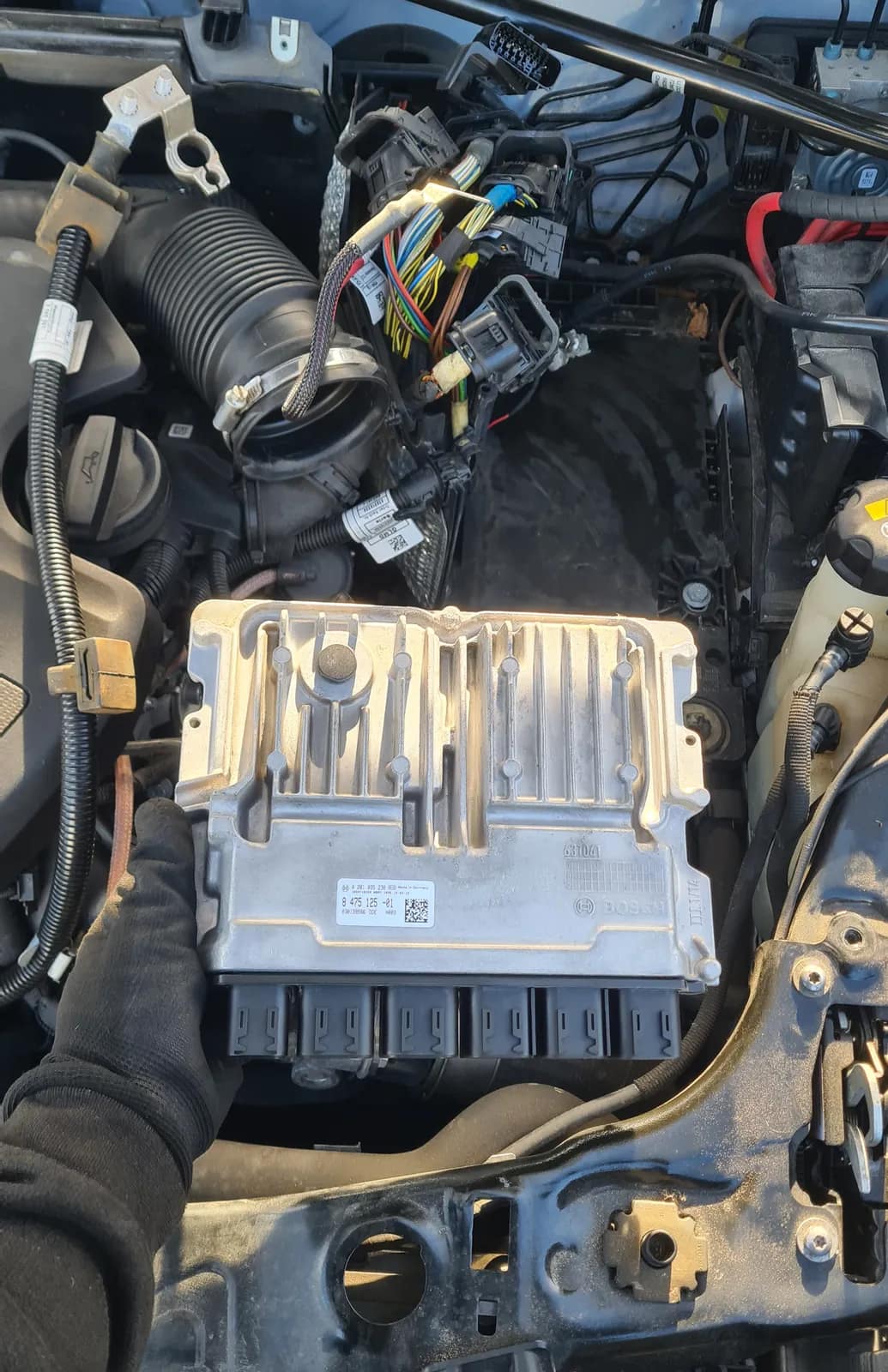
A software delete adds nothing. The engine computer is remapped so that it no longer runs the AdBlue system or monitors the NOx sensors, and the related fault codes, the warning and the countdown are cleared. DieselNet, the diesel emissions reference, describes this family of tools as overwriting the on-board diagnostic system.
This is the only method we use. There is no box to fit and no loom to splice, and the work is done at the vehicle. It does not mend the part that failed, and we do not clean or mend AdBlue parts. The software stops asking the question the failed part could not answer.
Emulator and Software Delete Compared
Side by side, the two methods differ in what is on the vehicle afterwards and in how each one is found.
| Compared | Emulator Box | Software Delete |
|---|---|---|
| What it is | A device that imitates signals from AdBlue components | A change to the engine computer's own software |
| Fitted to the vehicle | A box, spliced into the emission control wiring | Nothing |
| Engine software | Left standard | Rewritten, so the calibration no longer matches the maker's |
| The original fault | Masked, still present | No longer monitored, still present |
| How it is found | By eye: the box, the splice, a filler neck full of dirt | By reading the engine computer and comparing its software |
| To go back to standard | Remove the box, restore the wiring, fix the masked fault | Write the original software back, and the system must work |
How Emulators Have Been Found At The Roadside
DVSA has checked lorries for emissions cheat devices across Great Britain since 1 September 2018. Its own announcement says a driver caught with one has 10 days to remove the device and repair the emissions system, and can be fined £300 and have the vehicle taken off the road if they carry on. DVSA can also refer operators to the Traffic Commissioners, who can remove an operator's licence.
The Traffic Commissioner decision shows what gave one lorry away. The examiner's suspicions started with an AdBlue filler neck that was full of dirt all the way down. His photographs showed the device spliced into the wiring, and he said the behaviour of the dashboard warning lights had alerted him as well. None of that needs a laptop. The published checks are aimed at lorries, not cars and vans, but they show what an examiner looks for.
Where UK Law Stands In 2026
The position is moving, so here is what the Department for Transport has said this year. Its consultation of July 2026 lists manipulation of the SCR system, 'often referred to as AdBlue Delete', among the modifications it would always consider illegal. The same paper admits a gap: regulation 61A of the Construction and Use Regulations was last updated for Euro 4 and Euro V, and there is currently no requirement to maintain the emissions control system of a Euro 5 or 6 light vehicle.
The Department proposes to close that gap. It envisages new legislation in the summer of 2027 with a six-month lead-in, enforced by DVSA, and it does not propose to distinguish between hardware and software alterations. The consultation closed on 6 September 2026 and the outcome has not been published. The exemptions it describes in the current rules include a vehicle used off-road and one being driven to a port for export.
At the MOT, the inspection manual tells testers to check emission control components that are visible and identifiable, and names selective catalytic reduction among them. Equipment that is missing, obviously modified or obviously defective is a major fault.
Our own rule has not changed and the consultation does not change it. A car or van that is driven on the road keeps its AdBlue system.
What We Do, and What We Will Not Fit
We carry out AdBlue delete remaps for off-road, competition, agricultural and export vehicles, in software, at the vehicle, across Liverpool, Manchester and the North West. The NOx sensor delete is part of the same remap. The DPF is a separate system and is not touched, and if it is blocked as well it can be cleaned in the same visit.
We do not sell or fit emulator boxes. If a vehicle is going back on the road, our back to stock service writes the original software back, and the AdBlue system then has to be working for the vehicle to run properly and pass its MOT. Send the registration and what the dashboard is showing through the contact page, and say how the vehicle is used.
Sources
- RAC, AdBlue
- Bosch Mobility, NOx sensor
- Traffic Commissioner decision, D K Barnsley and Sons Ltd, 28 March 2018
- DieselNet, Emissions tampering
- DVSA, Checks for lorry emission cheats start across Great Britain
- Department for Transport consultation, Regulating environmental impact of in-use emissions of road vehicles, 6 July to 6 September 2026 (updated 18 August 2026)
- Department for Transport, consultation status page
- GOV.UK MOT inspection manual for cars and light commercials, section 8.2.2.1