
Guide
DPF, EGR and AdBlue Deletes: The MOT and UK Law
By Wojtek Kujawski, Voytech Tuning · · updated
The short answer
The Department for Transport treats a DPF, EGR or AdBlue delete on a vehicle used on UK roads as illegal, and its guidance on DPF removal gives fines of up to £1,000 for a car and £2,500 for a light goods vehicle. MOT testers have checked for the DPF since February 2014. New legislation to tighten the rules is planned for 2027. Deletes are for off-road, competition, agricultural and export vehicles.
Not sure? A mobile DPF clean starts from £225
Mobile, at your home or work across Merseyside and Greater Manchester.
What UK Law Says About Emissions Equipment
Regulation 61A of the Road Vehicles (Construction and Use) Regulations 1986 is the rule on emissions from vehicles in use on a road. Two parts matter here. The vehicle must not fail its limits because of 'an alteration to the propulsion unit or exhaust system', and any device fitted to control emissions must be kept 'in good and efficient working order'. A DPF, an EGR valve and an AdBlue (SCR) system are all devices of that kind.
The Department for Transport's guidance note on diesel particulate filters says removing a DPF 'will almost invariably contravene these requirements, making the vehicle illegal for road use', and that the penalties are fines of up to £1,000 for a car or £2,500 for a light goods vehicle. The Department takes the same view of EGR and AdBlue: its 2026 consultation lists DPF removal, AdBlue delete and EGR manipulation together as modifications it would always consider illegal.
The same consultation is candid about a gap. Regulation 61A was last updated for Euro 4 and Euro V, and the Department says there is currently no requirement to maintain the emissions control system of a Euro 5 or 6 car or van. It proposes to close that gap with new legislation in the summer of 2027, a six-month lead-in and DVSA enforcement, with no distinction between hardware and software changes. The consultation closed in September 2026 and the outcome has not been published. None of this changes the MOT, or what we do.
What The MOT Tester Checks On A Diesel
The MOT has checked for the presence of a DPF since February 2014, and DVSA told testers that a vehicle built with one and presented without it should fail. On 20 May 2018 the rules tightened: visible smoke of any colour from a DPF-equipped diesel became a major fault, and so did any evidence that the DPF has been tampered with. A DPF can that has been cut open and rewelded is rejected unless the owner can show a valid reason, such as a filter clean.
| MOT Check | What Fails It | Category |
|---|---|---|
| Emission control equipment | Equipment fitted by the manufacturer missing, obviously modified or obviously defective | Major |
| Diesel particulate filter | Evidence the DPF has been tampered with | Major |
| Visible smoke (DPF-equipped diesel) | Smoke of any colour from the exhaust | Major |
| Engine warning light (diesels first used from 1 July 2008) | Light not working or showing a malfunction | Major |
| Smoke opacity (first used from 1 January 2014) | Reading above 0.7m-1 | Major |
EGR and AdBlue Deletes At The MOT
The MOT manual does not have a separate line for EGR or AdBlue. Both fall under 'emission control equipment fitted by the manufacturer missing, obviously modified or obviously defective', which is a major fault if the tester can see it. An AdBlue fluid leak on its own is not a reason for failure.
A delete done in software is written so the engine warning light stays off, which is why the visual check and the smoke test carry the weight at the MOT. That does not make a deleted road vehicle legal in the Department for Transport's view. The MOT is a check on one day; the rules on emissions apply every time the vehicle is used on a road, and DVSA has described passing a vehicle known to have its DPF missing as fraud.
Roadside Checks On AdBlue Emulators
Enforcement is not limited to the MOT. DVSA ran a pilot at five sites in 2017 and 2018, checked 20,986 heavy vehicles for AdBlue emulators, and found 449. It began nationwide checks from September 2018. Operators caught with one get a prohibition and a short deadline to remove it, and at least one operator's licence has been revoked over an emulator. Those checks target lorries and coaches, but they show how the authorities view a disabled AdBlue system.
Deletes and Your Insurance
DVSA has warned that removing a DPF can invalidate a vehicle's insurance. Any delete is a modification, and the Financial Ombudsman Service has backed insurers who voided policies over undeclared engine modifications. For a vehicle that never goes on a public road, check what cover it has and tell that insurer about the change. Our guide on remaps and insurance explains what insurers can do when a modification is not declared.
Where A Delete Is Legal: Off-Road, Competition, Agricultural and Export
The road rules apply to vehicles used on a road. A vehicle that is not, or that is leaving the UK, is in a different position. These are the uses deletes are sold for:
- Off-road vehicles used only on private land, such as site vehicles, farm yards and private estates.
- Competition vehicles: track, rally, drag and other motorsport cars that are trailered to events.
- Agricultural machinery and plant that works off the public road.
- Export vehicles leaving the UK, where the rules of the country they go to then apply, so check them first.
Our Deletes, and What We Do For Road Vehicles
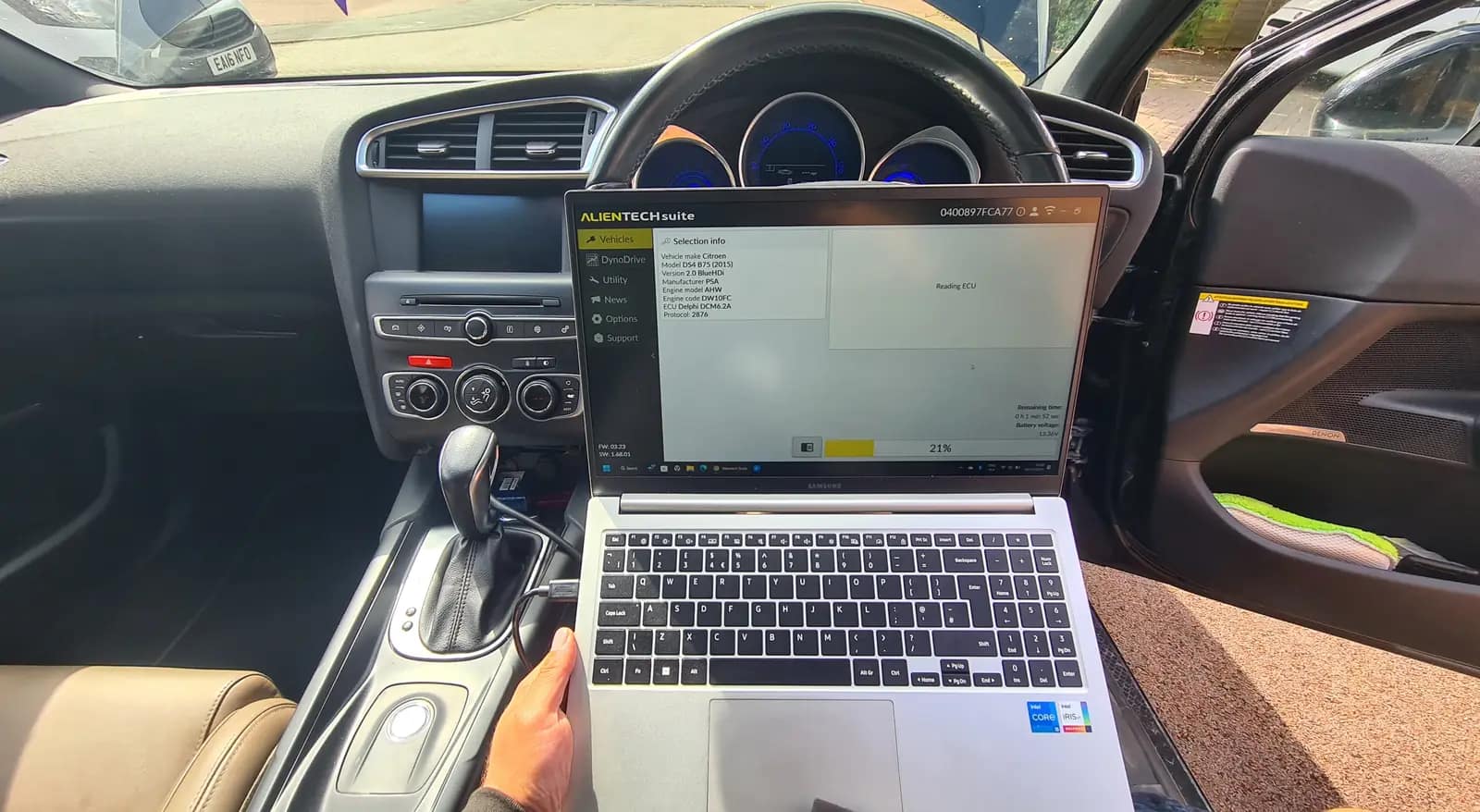
We carry out DPF delete remaps (from £185), EGR delete remaps (from £195, or £255 for both) and AdBlue delete remaps (from £285) for off-road, competition, agricultural and export vehicles, at the vehicle. The details for each are on the DPF delete, EGR delete and AdBlue delete service pages.
For a car or van that stays on the road with a blocked DPF, the answer is a clean, not a delete. Our mobile DPF cleaning starts from £225: diagnostics first, a high-pressure chemical clean, then a recheck, usually 45 to 60 minutes on site. On a Mercedes Sprinter in St Helens with 120% soot load and limp mode, we found 2 of the 3 exhaust temperature sensors dead, cleaned the filter on site with foam, and the owner booked the sensors in for the next day.
Sources
- Road Vehicles (Construction and Use) Regulations 1986, regulation 61A(3)(a) and (c)
- Department for Transport guidance note, Diesel particulate filters, published 4 December 2013 (MOT DPF check since February 2014; removal makes the vehicle illegal for road use; fines up to £1,000 car, £2,500 light goods vehicle)
- DVSA Matters of Testing blog, Diesel particulate filters
- GOV.UK, MOT changes 20 May 2018 (smoke of any colour and DPF tampering are major faults)
- GOV.UK MOT inspection manual for cars and light commercials, section 8.2.2 (emission control equipment, rewelded DPF, MIL from 1 July 2008, opacity 0.7m-1 from 1 January 2014) and 8.4.1 (SCR fluid leak not a failure)
- DVSA AdBlue emulator pilot (20,986 vehicles checked, 449 found) and nationwide checks from 1 September 2018
- Operator's licence revoked over an AdBlue emulator
- Financial Ombudsman Service, How car modifications affect your insurance cover
- Department for Transport consultation, Regulating environmental impact of in-use emissions of road vehicles, 6 July to 6 September 2026