
Guide
DPF Light Keeps Coming On: What The Timing Tells You
By Wojtek Kujawski, Voytech Tuning ·
The short answer
A DPF light that keeps coming back means the filter is filling faster than the car can burn it off, or a sensor is misreading it. How soon it returns is the clue. Back within days points to a fault stopping regeneration, every few weeks to journeys that are too short, and shrinking gaps on a high-mileage car to ash.
Mobile DPF cleaning from £225, diagnostics included
Mobile, at your home or work across Merseyside and Greater Manchester.
Why The DPF Light Comes Back After It Has Gone Out
The light going out only means the last blockage was cleared. A regeneration burns off the soot in the filter, the reading drops, and the filter starts filling again from the next mile. In normal use you do not notice any of this. The AA says a car runs an active regeneration every 300 miles or so, and it does it without telling you. The light is the car saying a regeneration was due and did not happen.
A light that returns is the same question asked again: what is stopping this car burning its soot? The gap between warnings tells you where to look first.
What The Timing Tells You
Before anyone plugs in a scan tool, the gap between warnings narrows things down. These are rules of thumb, not a diagnosis, but they tell you where to start.
| When The Light Returns | What It Usually Points To | Where To Start |
|---|---|---|
| Within days, or straight after a forced regeneration | A fault that stops regeneration, or a sensor or hose misreading the filter | Diagnostics before any more driving or cleaning |
| Every few weeks | Journeys too short or too slow for a regeneration to finish | A longer run each week, then diagnostics if nothing changes |
| Sooner each time on a high-mileage car | Ash taking up room in the filter | Readings first, then a straight answer on cleaning or replacement |
| With the engine management light, an AdBlue warning or limp mode | Another system fault holding regeneration back | Have the codes read, and do not keep driving in limp mode |
Back Within Days: Something Is Stopping The Burn
If the light is back before the week is out, driving style alone does not explain it. Either the car is not regenerating at all, or it thinks the filter is full when it is not.
A Mercedes Sprinter van we went to in St Helens is that pattern in one job. Two of its three exhaust temperature sensors had stopped working, so the van could not run a regeneration. The soot load climbed to 120% and it dropped into limp mode. We cleaned the filter on site with foam, but the clean was only half of it. The owner booked the sensors in for the next day, because a van that cannot regenerate fills up again.
A forced regeneration at a garage hits the same wall. It burns the soot that is there and leaves the reason it built up. If your light returned soon after one, ask what the readings were before and after, and whether anyone checked the sensors.
Every Few Weeks: The Journeys Are Too Short
This is the pattern the RAC puts first: short, low-speed trips where the exhaust never gets hot enough, and regenerations that are cut off when the engine is switched off.
The test costs nothing. When the light is amber and the car drives normally, give it the run your handbook asks for, then build a longer drive into each week. If the light stops returning, you have your answer and you did not need us.
If every journey you make is a short one, a diesel with a DPF will keep doing this. A clean puts the filter back where it started, and the same driving fills it again. We would rather say that before you book than after.
Sooner Each Time On A High-Mileage Car: Ash
Soot burns. Ash does not. DieselNet describes ash as the incombustible material left behind after regeneration, from oil additives, traces in the fuel and engine wear. Every bit of room it takes is room the soot no longer has, so the filter reaches its limit sooner and the gaps between warnings shrink.
The wrong engine oil speeds it up, which is why the RAC says DPF engines need low-ash oil. The AA expects a filter to last well over 100,000 miles, and says ash only comes out with the filter off the car at a specialist cleaner. On a car past that mileage with warnings getting closer together, ash is the first suspect, and the pressure reading on a freshly regenerated filter will show it.
What Makes A Returning DPF Light Worse
Three habits turn a nuisance into a bill.
- Clearing the code and carrying on. The warning goes, the soot stays, and the next thing you see is limp mode.
- Switching off halfway through a regeneration, again and again. Vauxhall warns that repeatedly interrupting the cleaning process may damage the engine.
- Paying for one forced regeneration after another on a car with a sensor fault. It cannot finish them, so each one buys a little time and nothing else.
How We Find The Cause When A DPF Light Keeps Returning
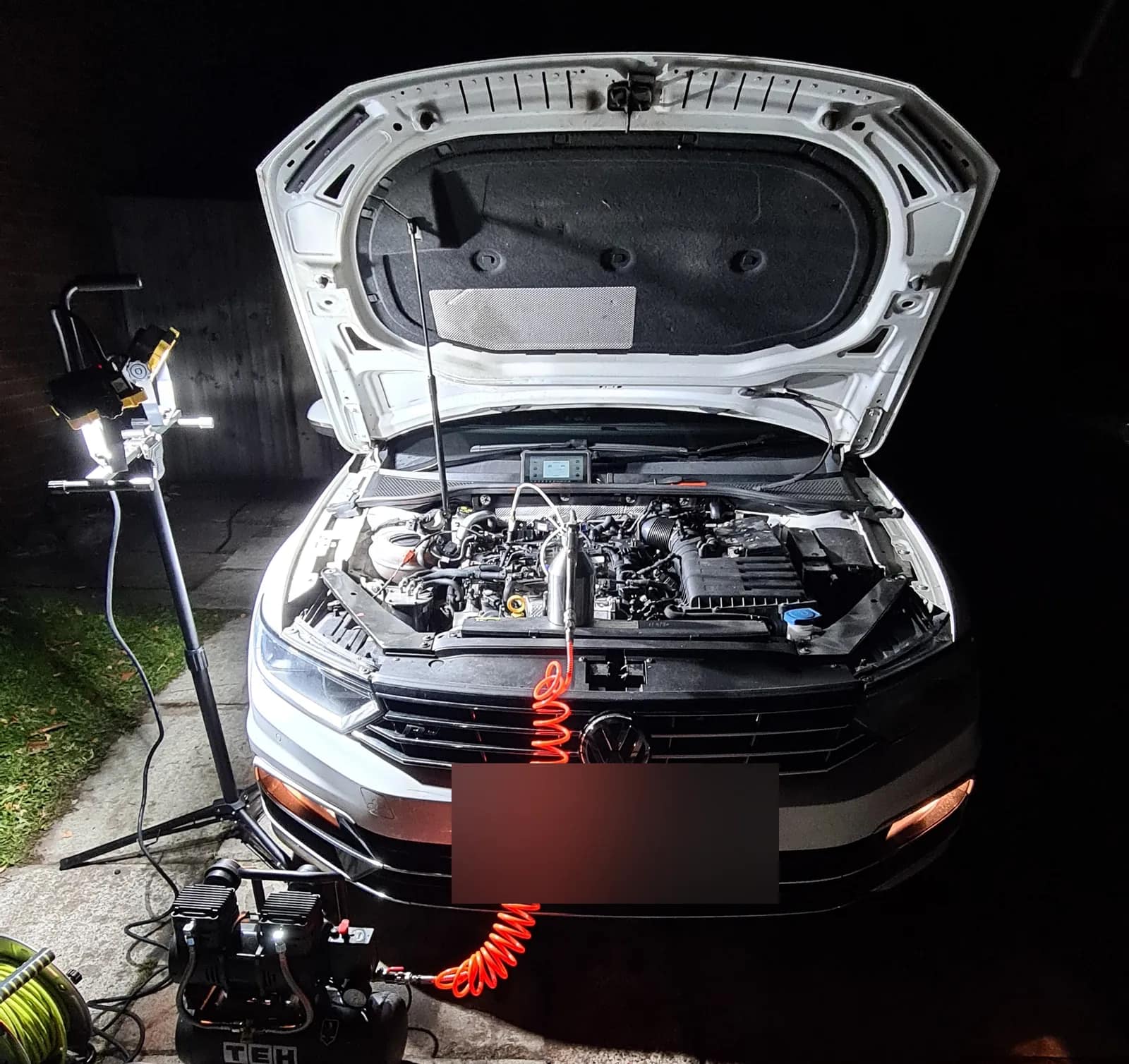
Our DPF visits start with diagnostics for exactly this reason. We read the fault codes, check the pressure and soot figures and the sensors that control regeneration, and ask how the car is used. If the filter is loaded and nothing else is wrong, a high-pressure chemical clean follows and the figures are read again afterwards.
If the readings show a failed sensor, an EGR or AdBlue fault or a filter past cleaning, you hear that before any cleaning starts. We do not replace sensors or filters ourselves, so you get the finding and what to ask a garage for. We come to the car across Liverpool, Manchester and the North West. Tell us how often the light has come back and send the registration through the contact page.