
Guide
DPF Regeneration Explained: Passive, Active and Forced
By Wojtek Kujawski, Voytech Tuning ·
The short answer
DPF regeneration is how a diesel burns the soot trapped in its particulate filter. Passive regeneration happens on a steady 30 to 50 minute motorway or A-road run. Active regeneration is started by the engine at about 45% soot load. Forced regeneration is run with a diagnostic tool when the other two have failed.
Mobile DPF cleaning from £195, diagnostics included
Mobile, at your home or work across Merseyside and Greater Manchester.
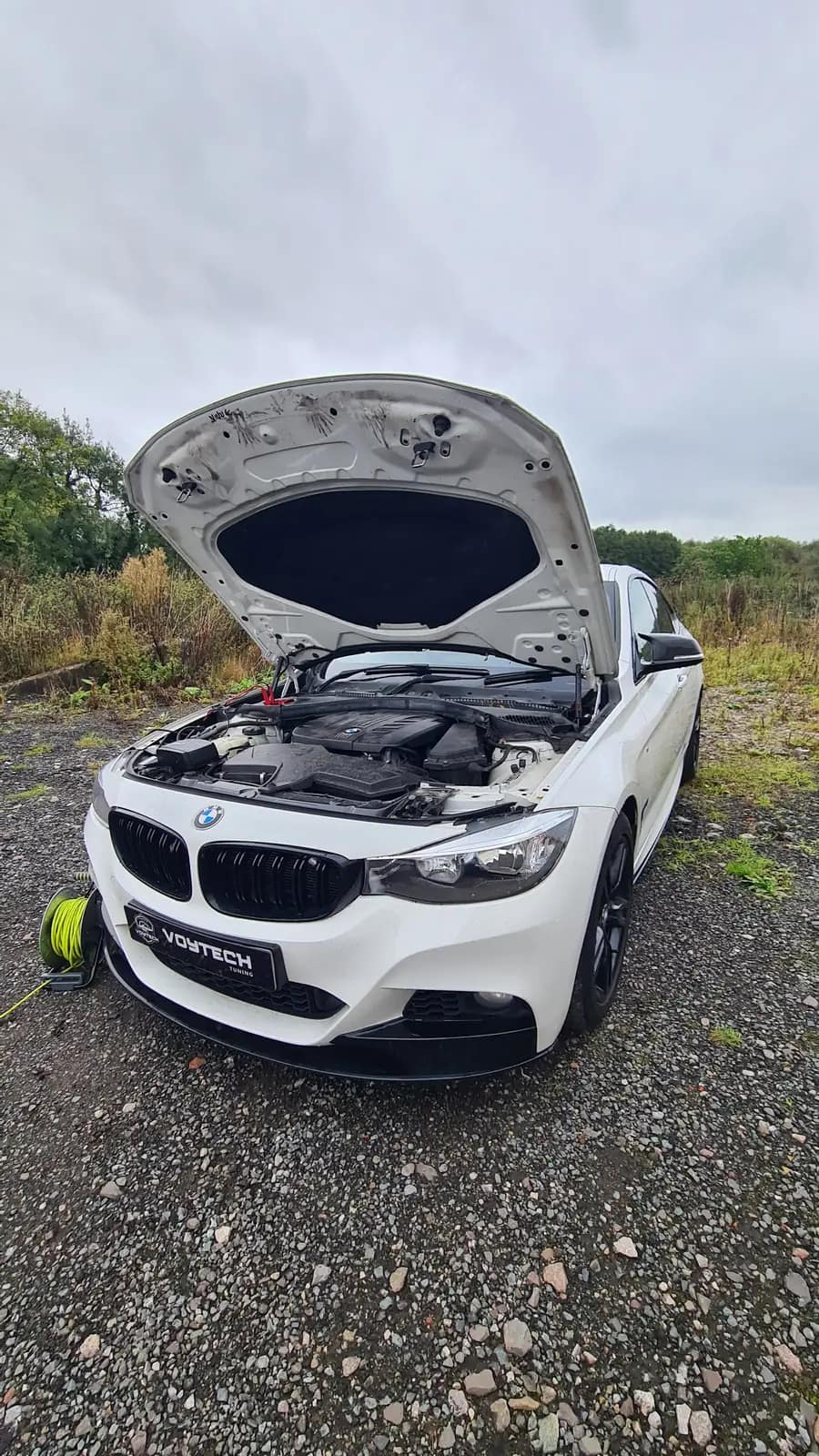
What DPF Regeneration Is
A diesel particulate filter traps soot from the exhaust in a honeycomb of fine channels. As the channels fill, the engine reads a rising pressure difference across the filter; Bosch, which makes these sensors, describes the differential pressure sensor as the part that reports the filter's charge status. When the load gets high enough, the soot has to be burnt off at high exhaust temperature. That burn is called regeneration.
Soot burns. Ash does not. DieselNet describes ash as the incombustible material left behind after regeneration, made up of oil additives, trace elements in the fuel and engine wear. Over many miles it builds up in the filter, and no amount of regeneration will shift it.
Passive, Active and Forced Regeneration Compared
There are three ways the soot gets burnt, and they differ in who starts them and what they need.
| Type | How It Starts | What It Needs | Typical Length |
|---|---|---|---|
| Passive | On its own, from exhaust heat | A steady run at speed on a motorway or fast A-road | The RAC suggests a 30 to 50 minute run |
| Active | The engine control unit, at about 45% soot load (RAC) | Extra fuel injected to raise exhaust temperature, plus enough driving to finish | The AA says 5 to 10 minutes, roughly every 300 miles |
| Forced | A technician with a diagnostic tool, car stationary or on a set drive | A working system: sensors reading correctly, enough fuel, no blocking faults | Ford's Transit Custom handbook says a manual regeneration can take up to 40 minutes |
Passive Regeneration
Passive regeneration is the cheapest kind because it costs nothing. On a long run at speed, the exhaust gets hot enough to burn soot as it collects. A diesel that does the M62 or the M58 every day barely has to think about its filter. A diesel that does two miles to school and back, five days a week, never gets hot enough, so the soot keeps piling up. This routine run is not the same as the drive a warning light asks for: once the DPF light is on, the car wants a prompted regeneration, and the maker's own instruction applies, as set out under active regeneration below.
Active Regeneration
When the soot load climbs, the engine starts its own burn by injecting extra fuel to raise the exhaust temperature. You may notice it: the RAC lists the cooling fan running after you park, a higher idle, stop/start switching off, higher fuel use and a hot, sharp smell. If you switch off in the middle of one, it stops and has to try again later.
When the DPF light asks for a drive, that is a prompted regeneration, and the maker's instruction applies. Ford asks for a steady 30mph or more for about 20 minutes. Volkswagen asks for at least 60 km/h (about 37mph) at 1,800 to 2,500 rpm for at least 15 minutes. Vauxhall says keep the engine above 2,000 rpm and do not stop until it finishes, which can take up to 25 minutes.
Forced Regeneration
A forced regeneration is started from a diagnostic tool when the car has not managed an active one. The tool tells the engine to run a burn, usually with the car parked and the engine held at raised revs. The RAC puts the cost at around £100 to £250.
Forced regeneration works when the only problem is soot and the system is healthy. It is not the right answer for every blocked filter. If a faulty sensor or another engine fault stopped the normal regenerations, a forced one either will not run or will clear the soot for a few weeks until the same fault fills it again.
Why Regenerations Fail
When the light keeps coming back, the question is not how to burn the soot but what is stopping the car burning it. These are the usual reasons regeneration fails:
- Short trips. The exhaust never reaches the temperature needed, and active regenerations get cut off when the engine is switched off.
- Sensor faults. A differential pressure sensor or exhaust temperature sensor giving wrong readings means the engine cannot judge or run a regeneration. On a Mercedes Sprinter van in St Helens, two of the three exhaust temperature sensors had stopped working. The van could not regenerate, the soot load reached 120% and it went into limp mode.
- EGR problems. An EGR valve stuck open upsets combustion and makes more soot, so the filter fills faster than it can empty.
- AdBlue crystals. On a 2021 Ford Kuga with only 30,000 miles, we expected a pressure sensor or temperature sensor fault. It was neither. AdBlue had crystallised around the injector, and the crystals had blocked the pipes to the pressure sensor, so the engine had no true reading of the filter. The diagnosis left the owner two options: a new filter or a deep machine clean.
- Low fuel. Some makers will not start a regeneration on a nearly empty tank; Volkswagen asks drivers to refuel first.
- Wrong oil and ash. DPF engines need low-ash (low SAPS) oil. The wrong oil adds ash, which regeneration cannot remove.
What To Do When Regeneration Is Not Working
Start with the simple step. If the DPF light is amber and the car drives normally, give it the drive your handbook asks for. If the light clears and stays clear, the cause was driving pattern, and a longer run every week or two will help it stay that way.
If the light returns, or never clears, stop repeating the drive and get the system diagnosed. Voytech Tuning's DPF service starts with exactly that: fault codes, pressure and soot readings, and checks on the sensors that stop regeneration. If a clean is the right fix, a high-pressure chemical clean follows, then a recheck of the readings and advice on any fault that needs a separate repair. We do not diagnose, clean or repair EGR or AdBlue systems, and we do not replace sensors. For those two systems we only offer a delete remap, for off-road vehicles. On the Sprinter, the diagnostics showed the two dead temperature sensors, and the owner booked them in for the next day.
Mobile DPF cleaning starts from £195 including the diagnostics and recheck, done at your home or workplace across Liverpool, Manchester and the North West, with an average of 45 to 60 minutes on site.
Sources
- RAC, Diesel particulate filters (updated 28 Sep 2026)
- The AA, Diesel particulate filters
- DieselNet, Ash accumulation in diesel particulate filters
- Bosch Mobility, Differential pressure sensor
- Ford Tourneo Custom / Transit Custom owner's manual, Diesel particulate filter
- Volkswagen UK, Diesel particulate filter warning light
- Vauxhall UK help centre, Cleaning my diesel particulate filter
- Stoneacre (UK dealer group), EGR valve explained
- Wynn's, AdBlue and SCR crystallisation