
Guide
NOx Sensor Fault Symptoms, and Why The Fault Keeps Coming Back
By Wojtek Kujawski, Voytech Tuning ·
The short answer
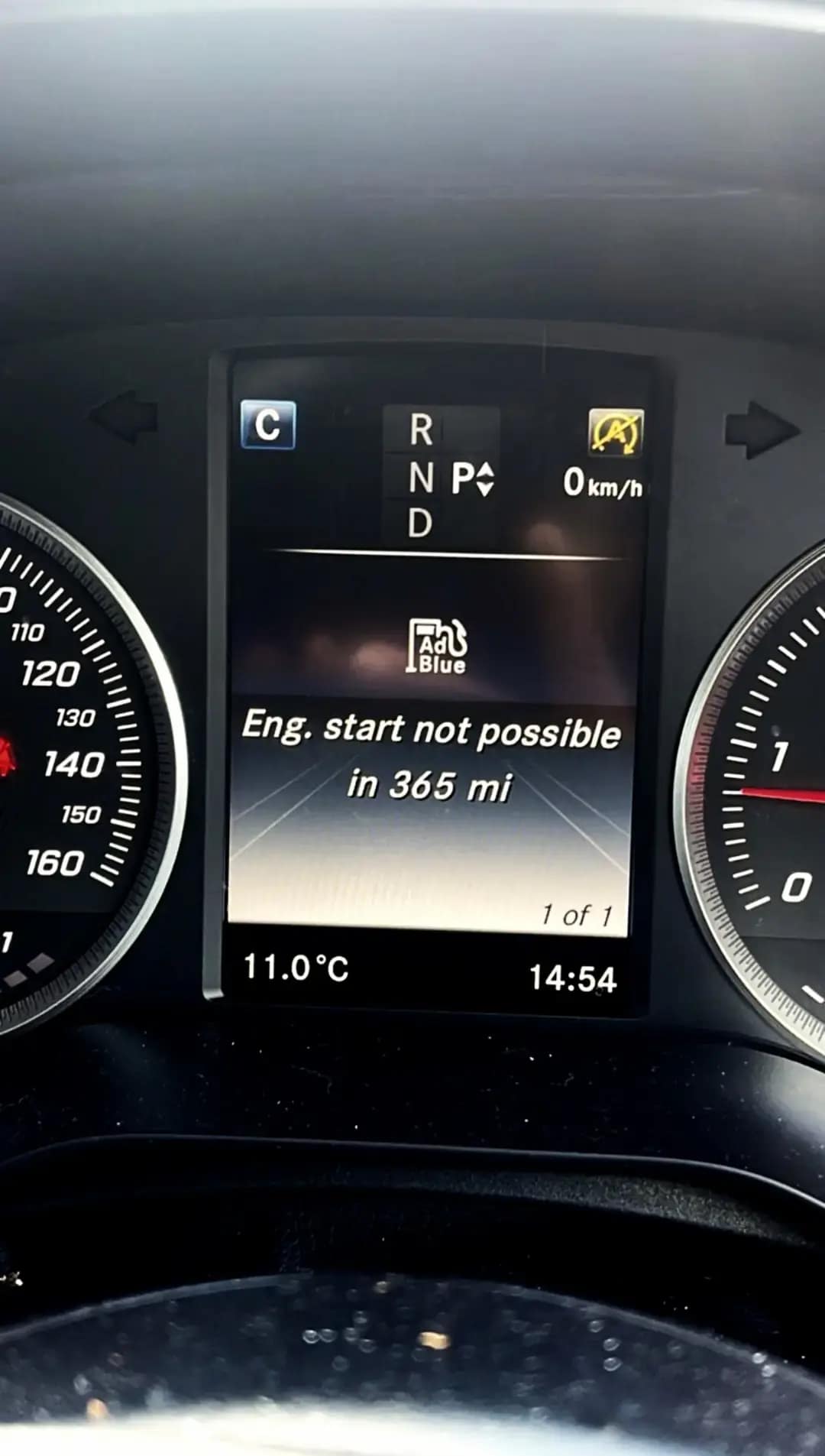
A failing NOx sensor usually shows as an engine or emissions warning light, an AdBlue or SCR fault message, and often a 'no engine start in X miles' countdown. Power and driving normally feel the same at first. The sensor measures nitrogen oxides in the exhaust, so a fault anywhere in the AdBlue system can look like a sensor fault.
AdBlue delete remaps from £285, for off-road use
Mobile, at your home or work across Merseyside and Greater Manchester.
What A NOx Sensor Does On A Diesel
A NOx sensor measures nitrogen oxides in the exhaust gas. On a diesel with AdBlue (the selective catalytic reduction, or SCR, system) there is normally one sensor after the SCR catalyst, and on many models a second one before it. The upstream sensor tells the engine computer how much NOx the engine is making, so it can decide how much AdBlue to inject. The downstream sensor checks that the catalyst has done its job.
The sensor is a ceramic element that only works when it is hot. Continental's sensors, for example, run at around 800 degrees Celsius, with a heater built in. It lives in the exhaust for its whole life, through thousands of heating and cooling cycles, which is why it is one of the parts that wears out.
NOx Sensor Fault Symptoms You Will Notice
Most drivers find out from the dashboard, not from how the car drives. These are the signs, roughly in the order they tend to show up.
- Engine management light (the amber engine symbol) on and staying on.
- A message such as 'AdBlue system fault', 'emissions fault' or 'check SCR system'.
- A countdown: 'no engine start in X miles'. The Euro 6 rules give the car 50 km (about 30 miles) after it detects a dosing problem before this starts.
- AdBlue use that seems wrong: the tank lasting far longer or emptying far faster than it used to.
- On some vehicles, reduced power or limp mode.
- The fault clears after a code wipe, then returns within a few drives.
NOx Sensor Fault Codes In General Terms
Every manufacturer has its own codes as well as the generic ones, so treat this as a guide to the families you are likely to see on a scan tool, not a diagnosis. The code tells you what the engine computer noticed. It does not always tell you which part failed.
| Code Family | What It Usually Describes | Points To |
|---|---|---|
| P2200 and the codes after it in the P22 range | NOx sensor circuit, heater or signal faults | The sensor itself or its wiring |
| P20EE | SCR catalyst efficiency below threshold | The whole system: sensor, AdBlue quality, dosing or catalyst |
| P20 codes around dosing and the reagent | AdBlue pump, injector, heater or quality faults | The AdBlue side, which the NOx sensor then reports |
What Causes A NOx Sensor Fault
Some faults are the sensor. Many are not. That split is the main reason owners pay for a new sensor and see the same warning a week later.
- Sensor wear: heat and time degrade the ceramic element and the heater, and the reading drifts or stops.
- Wiring and plugs: the sensor has a control box on a short loom near the exhaust, and damaged or corroded connections cause circuit codes.
- Exhaust leaks before the sensor: outside air dilutes the gas and upsets the reading.
- Poor AdBlue dosing: a blocked injector, a weak pump or crystals in the pipes mean too little AdBlue reaches the catalyst, so the downstream sensor sees too much NOx and reports it correctly.
- Wrong or diluted fluid: fluid that is not 32.5% urea to ISO 22241 cannot clean the exhaust properly.
- Too much AdBlue: NOx sensors also react to ammonia, so over-dosing can read as high NOx.
Why The Fault Keeps Coming Back After A New Sensor
The downstream sensor is the messenger. If the catalyst is not getting enough AdBlue, a brand new sensor will read the same high NOx as the old one and set the same code. A proper diagnosis compares the live readings from the upstream and downstream sensors while the car is driven, checks the fluid strength with a refractometer, and looks at the injector and pipes for crystals before any part is ordered.
Crystals are one cause to rule out early. On a 2021 Ford Kuga with 30,000 miles that we saw in St Helens, AdBlue crystals had built up around the injector and were blocking the pressure pipes, and the car had high DPF pressure too. No sensor would have fixed that.
Your Options Once The NOx Sensor Fault Is Confirmed
For a vehicle that is driven on public roads, the fix is a repair: a new sensor where the sensor has failed, or a repair to the dosing side where that is the cause. That is work for a main dealer or an AdBlue specialist. We do not diagnose, clean or repair AdBlue or NOx sensor systems. If the vehicle is still under the manufacturer's warranty, go to the dealer first.
What we offer is an AdBlue delete remap, from £285, for vehicles used off-road, in competition, in agriculture or for export. The remap switches off the SCR system, including the NOx sensor monitoring and the countdown, in the engine software. We come to the vehicle to do it.
The legal position in one line: disabling the AdBlue system or its NOx sensors on a vehicle used on UK public roads is against regulation 61A of the Road Vehicles (Construction and Use) Regulations 1986, so the delete is only for vehicles that do not use public roads or are leaving the UK.
Sources
- DieselNet, NOx sensors
- Regulation (EU) 2017/1151 Annex XVI as retained in UK law, paragraph 5.4 (50 km to rectify a dosing fault before inducement)
- P20EE SCR NOx catalyst efficiency below threshold, causes include NOx sensor, fluid quality, injector
- P2200 series NOx sensor circuit codes
- Crown Oil, AdBlue ISO 22241 (32.5% urea)
- Road Vehicles (Construction and Use) Regulations 1986, regulation 61A